内容简介:
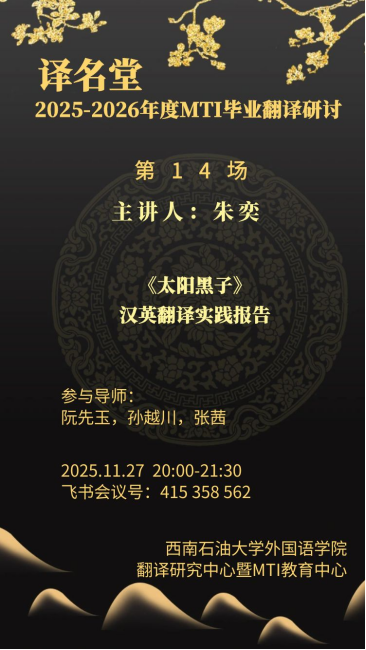
《太阳黑子》是沙辉创作的回忆式自传体短篇小说。作品以“若善”为视角,勾勒彝族家族三代人跨越百年的沧桑,交织个体记忆与集体历史,展现彝族人民在特殊历史语境下的生存智慧、顽强生命力与文化坚守,蕴含对生命本质的哲学思考,是关于生命尊严与文化认同的寓言。
译文修改:
例1:
ST: 祖父吃到天上掉下的馅饼,日子慢慢活泛起来。他早出晚归,开荒垦地,进山捕猎,样样勤快。种出的洋芋比人头还大,狩猎到的野物一个接一个。后来,第一房老婆给他生下一子。
TT1: With this unexpected blessing, life gradually picked up for Grandfather. He worked from dawn to dusk—busying himself with reclaiming wasteland, hunting in the mountains. The potatoes he grew were bigger than human heads, and he brought back wild game time and again. Later, his first wife bore him a son.
TT2: With this unexpected blessing, life gradually picked up for Grandfather. He worked from dawn to dusk—busying himself with reclaiming wasteland, hunting in the mountains. The potatoes he grew were bigger than human heads, and he brought back wild game time and again. Later, his first wife bore him a son.
例2:
ST: 跑婚、哭嫁的彝族风俗在那时候还很盛行,但这也让若善父亲伤透了脑筋。
TT1: Running away from marriage and crying before marrying were common Yi customs at the time, and this was why Ruoshan’s father was so troubled by it.
TT2: paohun and kujia were common Yi customs at the time, and this was why Ruoshan’s father was so bothered by it.
Translator’s note: A traditional marriage custom among the Yi ethnic group in Southwest China, referring to a practice where a young couple, in pursuit of free love, elopes away from their homes with mutual consent to form a marital union, bypassing the conventional arranged marriage procedures and parental approval typical of traditional Yi society. This custom embodies the Yi people's pursuit of romantic autonomy and is deeply rooted in their ethnic cultural values of valuing genuine emotional connections over arranged matches. It differs from forced elopement; instead, it is a voluntary choice made by both parties, and over time, such unions are often recognized by the families and community through subsequent customary rituals.
例3:
ST: 如今,若善鲤鱼跳“农”门,如愿以偿,却发现自己背上有着历史的沉重,怀里抱着记忆的厚重。
TT1: Now Ruoshan has achieved his dream of “carp leaping over the dragon gate” (that means he has transformed his identity from a farmer to a city resident with steady work). Yet instead of elation, he felt the crushing weight of history on his shoulders and the accumulated density of memory in his arms.
TT2: Now Ruoshan has achieved his dream of “carp leaping over the loong gate” (that means he has transformed his identity from a farmer to a city resident with steady work). Yet instead of elation, he felt the crushing weight of history on his shoulders and the accumulated density of memory in his arms.
研讨反思:部分文化负载词可以选择用拼音翻译,然后再进行加注。源文写作风格可以通过一些小词进行体现,同时句式上也应该符合文学翻译的特点,不可生搬硬套句型。